
In the modern luxury home, a space is no longer considered truly well-designed if it only appeals to the eye. The silent factor of acoustics—how sound behaves within a room—has emerged as a critical element of aesthetic and functional excellence. An architecturally stunning room with hard surfaces, tall ceilings, and vast open space will inevitably suffer from harsh echoes. Poor speech clarity, and an overall sense of sensory discomfort.
The challenge for today’s professional designers is the seamless integration of sound absorption. And diffusion into the interior schema without the space looking like a recording studio. This shift is turning traditionally utilitarian acoustic products into high-end decorative elements. Creating spaces that are balance, peaceful, and visually refined.
1. The Science of Sensory Comfort: Absorption vs. Diffusion
Achieving optimal acoustics involves two primary techniques: absorption and diffusion, each serving a distinct purpose in managing sound waves.
The Power of Absorption
Absorption involves materials that trap sound energy, converting it into a minute amount of heat, thus reducing echo and reverberation. This is essential for improving speech intelligibility in living rooms and creating clarity in home theaters.
- Soft Furnishings: The simplest acoustic treatments are thick, high-pile rugs (often layered with a felt pad). Heavy velvet or linen curtains, and upholstered furniture. These materials are natural sound sponges, providing a warm, tactile layer that absorbs mid-to-high frequencies.
- Designer Acoustic Panels: The biggest innovation lies in the transformation of acoustic panels. Today’s panels are works of art, available in:
- Fabric-Wrapped Art: Custom panels cover in designer fabrics (linen, tweed, wool, or even velvet) that can be arranged in geometric patterns or printed with custom art murals, disguising their function completely.
- Perforated Wood Slat Walls: Highly trending solutions that offer a luxurious, natural wood look while thousands of near-invisible micro-perforations allow sound to pass through to an absorptive core. They provide superior performance while maintaining a sophisticated, architectural aesthetic.
The Art of Diffusion
Diffusion, unlike absorption, scatters sound waves in multiple directions rather than eliminating them. This prevents a room from sounding “dead” or overly muffled. Preserving a natural, “live” feel while eliminating harsh reflections like flutter echo.
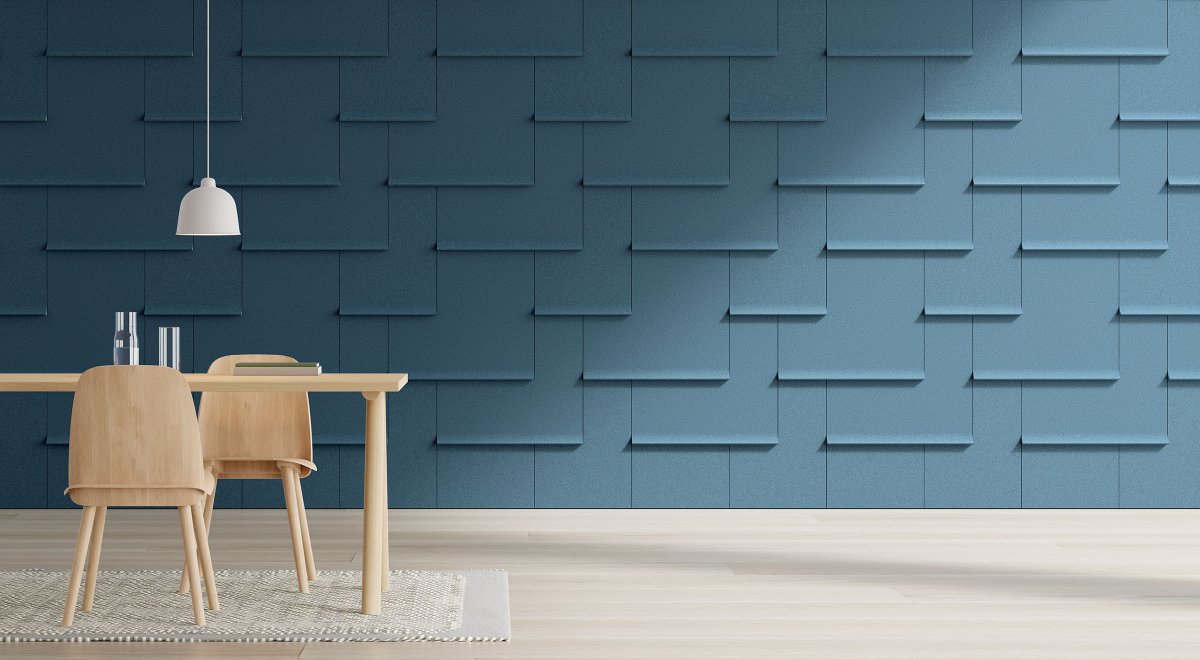
- Integrated Diffusers: These are often sculptural, textured wall treatments or ceiling elements (known as “clouds” or “baffles”) made from materials like carved wood or specialized foam that intentionally have an irregular surface. When light hits them, they create beautiful shadow patterns, fulfilling an aesthetic role while ensuring sound energy is evenly distribute, creating a sense of spaciousness.
2. Aesthetic Integration: Blending Form and Function
The true measure of a designer’s skill is the ability to make acoustic performance an undetectable part of the interior design.
- Biophilic Acoustics: Drawing on biophilic design principles, acoustic elements are being clad in natural materials or colors. Large, dense indoor plants are strategically group in corners to break up sound waves naturally, while wood-grain acoustic panels complement surrounding natural textures, enhancing a calming environment.
- Ceiling Treatments: In rooms with high or vaulted ceilings—known echo chambers—sound is often managed from above. Custom acoustic baffles or hanging clouds can suspend. These modular elements can align with pendant lighting or skylights, adding architectural interest and reducing sound reflection without consuming valuable wall space.
- Color and Texture Strategy: Dark, non-reflective colors are favored in media rooms to maximize visual contrast, but in living spaces, neutral, calming colors (greys, creams, soft beiges) use to wrap acoustic products, ensuring visual continuity and a relaxing mood. The focus is on tactile, textured materials that invite touch and effortlessly absorb sound.
Conclusion: The Quiet Revolution in Design
The fusion of acoustics and aesthetics marks a quiet, yet revolutionary, phase in interior design. We are moving beyond spaces that are merely beautiful to ones that are fundamentally comfortable on a sensory level. By utilizing innovative materials and strategic placement, designers can now eliminate annoying echoes and harsh noise without sacrificing elegance. The result is a home that looks stunning, sounds clear, and fosters a deep sense of calm and well-being—proving that true luxury is found not only in what we see, but also in what we hear (or, more accurately, what we don’t hear).