
The home theater is no longer a simple television pushed against a wall; it is a dedicated escape—an immersive, architecturally refined space designed for pure sensory indulgence. Crafting the ultimate home cinema requires a precise balance of aesthetic flair and technical mastery. It is where interior design meets physics, creating a magical viewing experience that rivals commercial theaters.
For those planning a custom home or a major renovation, understanding the core principles of home theater design is the key to creating a space that is comfortable, technologically advanced, and acoustically perfect.
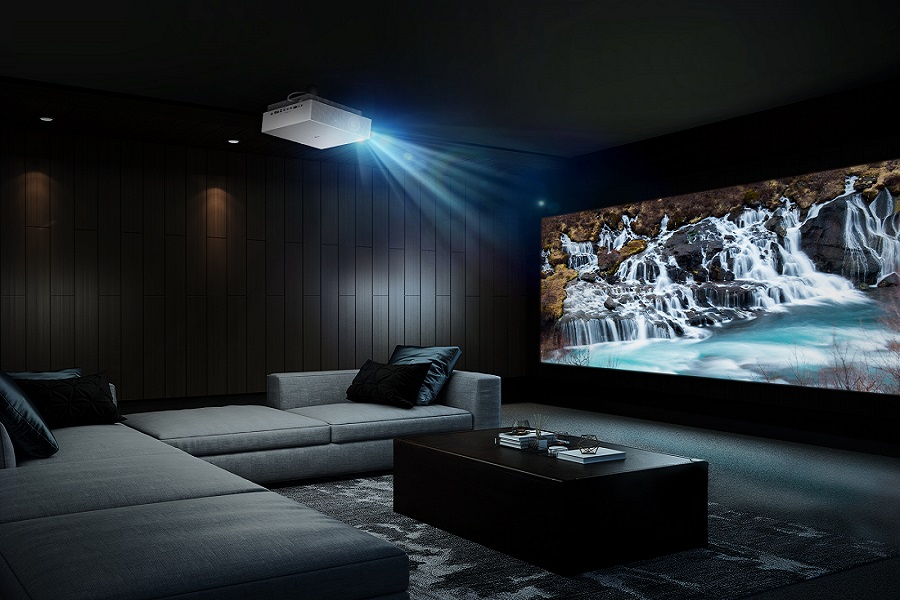
1. The Foundation: Room Geometry and Layout
Before selecting a single component, the room itself must optimize. The shape and dimensions are the foundational elements of acoustics and viewing comfort.
Acoustic Precision
- Avoid the Square: The golden rule of home theater design is to avoid cube or square rooms. These shapes cause sound waves to reflect and build up in ways that create uneven, boomy bass response and muddy sound. The ideal room is rectangular, with non-parallel walls sometimes preferred to prevent standing waves.
- The Golden Ratio: For the best possible sound distribution, professional designers often aim for room dimensions that adhere to a specific ratio (e.g., a 1:1.6:2.4 ratio for height, width, and length). While often challenging to achieve in existing homes, striving for non-uniform dimensions drastically improves audio quality.
Optimal Viewing Angles and Seating
The seating arrangement determines the immersion level. For the best cinematic experience, the screen should dominate the viewer’s field of vision, but not to the point of strain.
- The Sweet Spot: The industry standard recommends a horizontal viewing angle of between $36^\circ$ and $50^\circ$ from the primary seating position (the “sweet spot”). This is the range where the screen fills your peripheral vision for maximum immersion without causing head or eye movement.
- Tiered Seating: For multi-row theaters, stadium-style risers are essential to ensure a clear sightline for every seat. Risers should be high enough (typically 12 to 16 inches) to allow the back row viewer’s eyes to clear the heads of those in front.
- Screen Height: The vertical angle is also critical. The center of the screen should ideally be at or slightly below eye level from the main seating position to prevent neck strain during long movies.
2. Technical Excellence: Audio and Visual Hardware
The heart of any home theater is its technology. The current trend is driven by high-resolution visuals and truly three-dimensional sound.
Immersive Audio (Dolby Atmos and Beyond)
Standard surround sound is giving way to object-based immersive audio systems like Dolby Atmos and DTS:X.
- Height Channels: These systems require speakers installed in the ceiling to create a three-dimensional sound field, allowing sound objects (like rain or a helicopter) to move convincingly above and around the viewer.
- Invisible Sound: High-end design favors aesthetic minimalism. Speakers are often hidden behind perforated acoustic fabric walls (a “speaker wall”) or seamlessly integrated into the millwork and ceiling, delivering powerful sound without visual clutter.
Next-Gen Visuals
While 4K remains the industry standard, advanced visual technology is becoming more accessible.
- Projectors vs. Displays: For true cinema scale, high-end laser projectors paired with large, Ambient Light Rejecting (ALR) screens deliver unparalleled contrast and brightness. For smaller, multi-purpose media rooms, massive OLED or emerging MicroLED displays offer perfect blacks and vibrant colors.
- 8K Readiness: Future-proofing your system means choosing components (like AV Receivers and cabling) that can handle the increased bandwidth required for emerging 8K content.
3. The Designer’s Touch: Acoustics and Aesthetics
A home theater must be acoustically sound and visually stunning. This is where professional-grade acoustic treatment integrates with personalized design.
Taming the Room
Soundproofing (to prevent sound leakage) is the first step, but acoustic treatment is what truly refines the sound within the room.
- Absorption and Diffusion: Soft materials like thick carpets, plush seating, and heavy curtains absorb sound and reduce echo. Custom acoustic panels, strategically placed at the primary reflection points (where sound first bounces off the walls), absorb problematic frequencies. Diffusers are used to scatter sound, preventing a “dead” sound while maintaining clarity. These panels are often custom-wrapped in designer fabrics, acting as high-end wall art.
- Dark Color Palette: Dark, non-reflective colors (like deep charcoal, navy, or black velvet) are essential to absorb light spill from the screen, maximizing the image contrast and creating a true cinema feel.
Comfort and Control
- Reclining Luxury: Ergonomic, powered theater seating with built-in cup holders and USB charging ports are standard.
- Smart Automation: A single-touch control system (often integrated with the wider smart home network) manages everything: lowering the screen, starting the projector, dimming the lights, and setting the precise volume and climate—all with a single command.
Conclusion: The Ultimate Escape
Designing a dream home theater is an investment in unparalleled entertainment. It is a fusion of exacting technical standards—from calculating perfect viewing angles to engineering flawless acoustics—and bespoke luxury. When executed correctly, the home cinema transforms from a mere room into an immersive portal, ready to transport its audience to any world the director chooses, making it the ultimate personal sanctuary in the modern home.